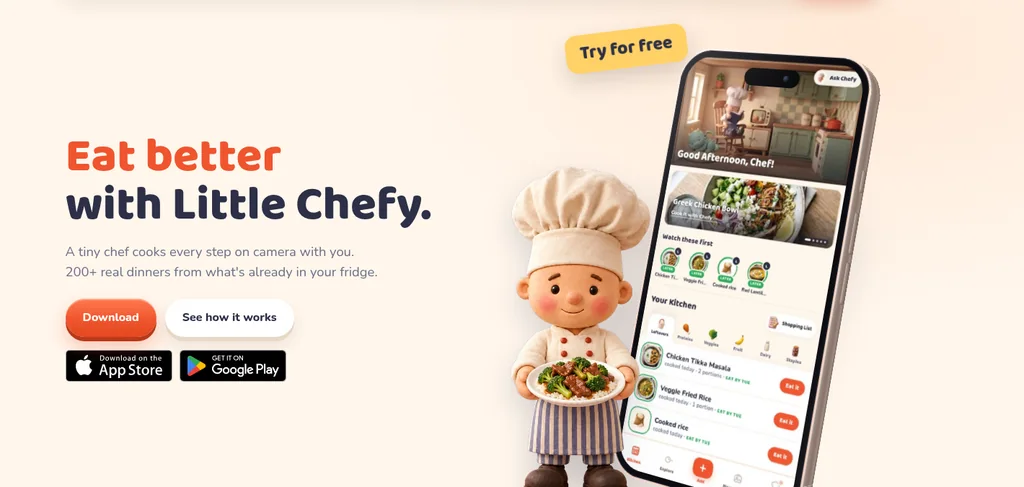

Little Chefy / self-owned product / preview
A little company
in the kitchen.
A tiny-chef recipe app that brings on-camera cooking, diet filters, and pantry ingredients into the same experience.
Jay Minakhom
Build businesses.Test technology.Make life better.
Business systems · Technology · Marketing

Private preview onlyPublic rights unverified



I build businesses, test technology, and share what I learn about making work and life better.
For owners and teams who want the marketing and technology side of the business to feel less scattered.
Business, technology, human behavior, learning, life. This is a home for the practical questions—and the ideas that don’t fit neatly inside a job description. The editorial copy here is a draft, not a finished biography.

Start with a small self-check. Look at one workflow, the next inquiry or the path from search to booking. Get a useful next step without handing over your email.
Explore the self-checksFactual relationship references, not endorsements or result claims.



Worked with


One grouped prior-career item. Roles and dates are not specified.
Named work only. No metrics, testimonials, or implied endorsement.


Dealership / supplied legacy lockup
Self-owned ventures, separate from client/company references. Product overviews—not invented results.
Little Chefy / self-owned product / preview
A tiny-chef recipe app that brings on-camera cooking, diet filters, and pantry ingredients into the same experience.


I Miss You Memorial / self-owned product / preview
Tribute pages for photos, videos, stories, and life-story timelines, with approval for contributed memories.

Self-owned venture / not a client
The client-facing agency for AEO, websites, advertising, and AI Front Desk.
Explore working togetherBusinesses, ideas, and three useful guide drafts. A little less in a straight line.
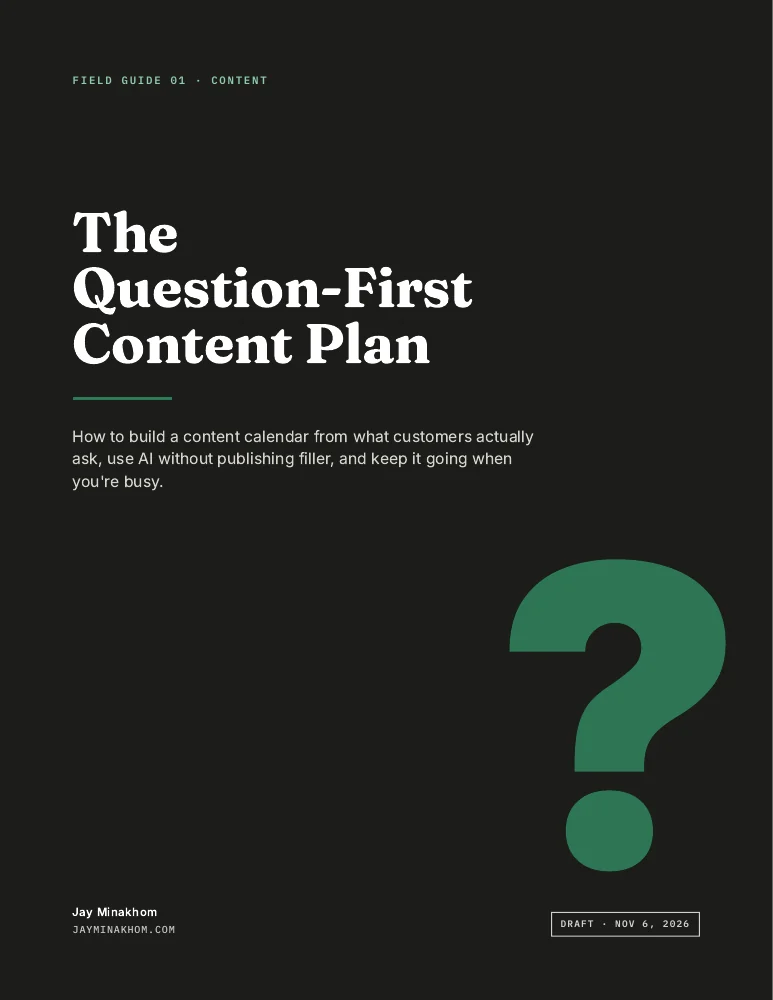
Free-resource draft / JM01
Build a useful content plan around the questions people actually ask.
Download the PDF draft (7 pages, about 380 KB)J Cubed
Partners
“The money scoreboard updates itself.”
From the supplied draft inspired by Sahil Bloom.
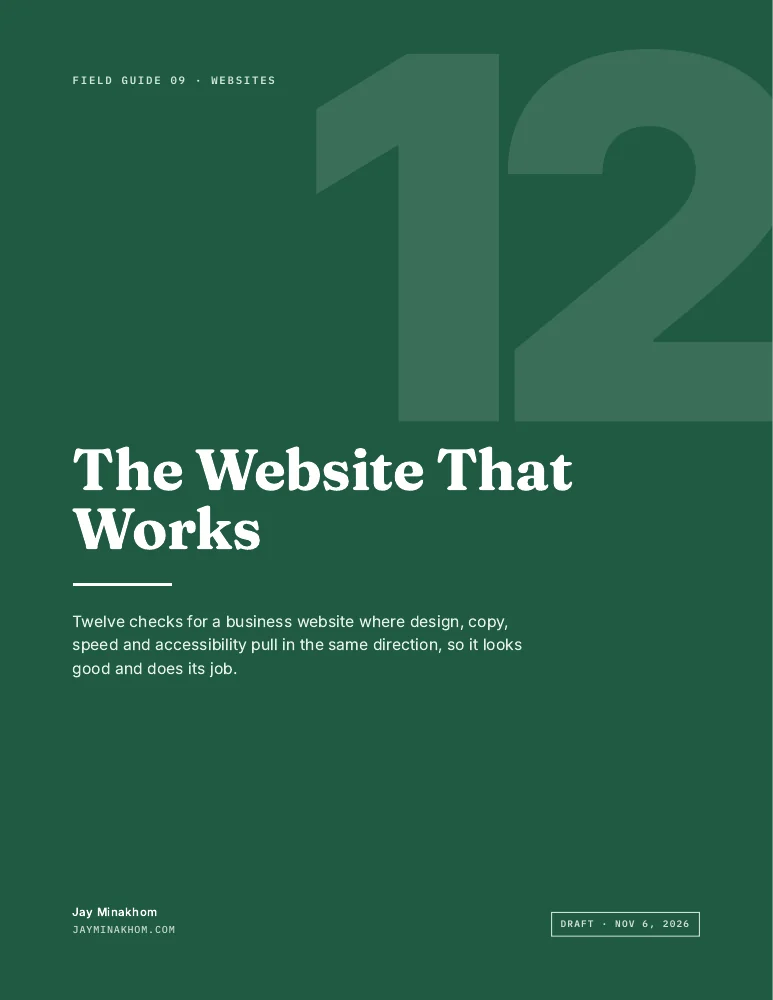
Free-resource draft / JM09
Twelve checks for clarity, design, speed, and accessibility.
Download the PDF draft (7 pages, about 330 KB)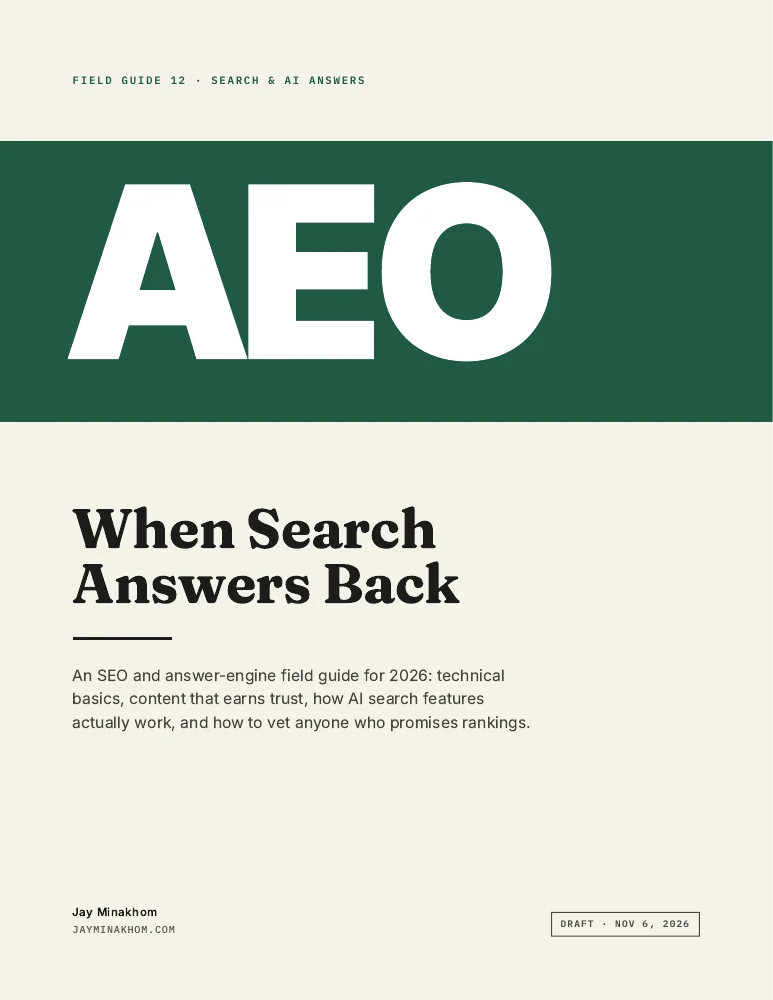
Free-resource draft / JM12
An SEO and AEO field guide. Fundamentals before promises.
Download the PDF draft (7 pages, about 400 KB)Practical guides you can work through with the tools you already have. No email required to read the ones below.


Selected excerpts from the six supplied original articles. All remain drafts, with the influences credited—not claimed as Jay’s original frameworks.
Start with the work on the calendar, then check what you can actually afford to hand off.
Read the articleThe activity behind a build and the outcome someone receives are different things.
Read the articleA wider way to think about time, energy, relationships, and what matters.
Read the articleMore useful systems. Less work getting in the way.
For owners and teams who want the marketing and technology side of the business to feel less scattered. Through J Squared Productions, a project can start with a clearer website, a better lead handoff, or one practical AI workflow.
Not sure where AI belongs? Start with the task that keeps slowing you down. We’ll look at what is worth building—and what is better left alone.

Proposed service scopes, starting with a contained pilot—not proven client offers or promises that every connection is available. Existing product cases remain owned-project overviews, not evidence of AI implementation results.
Less app-hopping. A clearer next step.
Your email, calendar and documents should help you move—not become another job. A scoped setup connects approved tools, gives your bot a clear job, and keeps sensitive actions behind your approval.
An owner requests a daily brief. The bot reviews the agreed inbox and calendar scope, finds the relevant documents, and brings back priorities and reply drafts for review.
Minutes spent preparing the daily brief; factual errors and drafts needing correction.
Give the next inquiry a clear way forward.
A missed call or unanswered question can leave a good lead waiting. We can scope an intake workflow that captures the essentials, answers approved questions and hands the conversation to the right person—not a bot pretending it knows everything.
A new website inquiry is checked against approved service-area and job-type rules. The team receives the intake summary and a proposed response; urgent or unclear requests go straight to a person.
Median time to a reviewed response; contact rate, qualified handoffs and unanswered inquiries.
Know who needs a response—and why.
Good conversations get lost between an inbox, a spreadsheet and the next busy day. A focused CRM workflow can organize the handoff, surface overdue follow-ups and prepare the next message without inventing a conversation that never happened.
An estimate inquiry lands in the review queue. After a person verifies the details, the CRM gets an assigned owner and a next-action date; a follow-up draft waits for approval.
Overdue leads; time spent updating records; reviewed follow-up completion and duplicate rate.
Find the right answer without hunting through folders.
Your team should not have to ask the same person where everything lives. A scoped knowledge assistant can retrieve approved policies, service details and how-to documents—with source links and a clear “I don’t know” when the answer is missing.
A team member asks how a service handoff works. The assistant points to the current approved SOP and flags a missing step instead of filling it in.
Time to find a verified answer; source-supported answer accuracy and no-answer rate.
Less copying. Fewer dropped details.
If the same information gets typed into three places, that is a good place to look for a better system. A small implementation can turn approved forms or documents into structured information, ready for a person to check before anything changes downstream.
A non-sensitive vendor form comes in. The workflow extracts the agreed fields, highlights missing information and prepares a record for human review—without paying an invoice or signing a document.
Minutes per completed item; field accuracy, correction rate and processing exceptions.
Make the business easier to understand—and act on.
A useful website answers real questions and makes the next step obvious. AEO and SEO work can sit alongside clearer service pages, working inquiry paths and advertising measurement, so visibility does not get separated from the business behind it.
A service business replaces a vague page with accurate service details, useful answers and a tested inquiry path. Search and campaign traffic are reviewed alongside actual lead quality—not just impressions.
Qualified inquiry rate; cost per qualified inquiry where ads run; search visibility and conversion-path completion.
Agree on the starting baseline, evaluation window, and review criteria before a pilot. The measures below describe what to track—not guaranteed improvements, rankings, revenue, or outcomes.
The useful part is not collecting more AI tools. It is knowing what your bot should read, what it should prepare, and where it should stop. Available connections must be checked in your own approved account before scope is agreed.
Possible handoff: an approved-app/permission map, one pilot workflow, evaluation notes, and team training.
Outbound messages, published content, and important record changes stay behind explicit human approval. A bot can prepare work; it does not get blanket permission to speak for you, sign documents, spend money, or make sensitive decisions.
From approved notes, prepare a meeting brief and a reply draft. A person checks the source material and both drafts before either is used or sent.
Map the work first. Then decide whether it needs AI, a simpler automation, or a clearer process. A pilot has a defined input, an output someone can check, and a place for exceptions to go.
Walk through the task, people, approved data, and cost of getting it wrong. Agree on scope and what a useful pilot would need to demonstrate.
Test one contained workflow on approved samples. Compare its output with a person’s work, record corrections, and decide whether it holds up.
A demo does not authorize live sending or record changes. Any later rollout needs separate approval, a named owner, and a safe way to stop.
Use client-owned approved accounts and only the access a task needs. Customer communications require the right permissions and human approvals. Legal, medical, lending, and other financial decisions stay with qualified people; no compliance or sensitive-decision outcome is promised.
Sensitive data stays out of a pilot unless safeguards, contracts, retention/residency requirements, and permissions have been checked. Phone, SMS, recording, and customer-facing AI require a separate review of channel consent, disclosure, recording rules, and opt-out handling. No mass-email prospecting or unattended message sending is included by default.
Tell me what keeps getting repeated, missed, or put off. We can figure out whether it needs a better process, a small implementation, or no new software at all.
Websites, AEO/SEO, and advertising remain part of the work. AI is an option inside the plan—not a requirement added to every project.
Booking pending. This private preview does not collect an inquiry or reserve a time. A verified Google Meet booking-flow URL is still required.
This page demonstrates proposed scopes and review boundaries. Rendering it does not test an account connection or deploy an integration.
A project index, not a claim of a finished case-study library.